
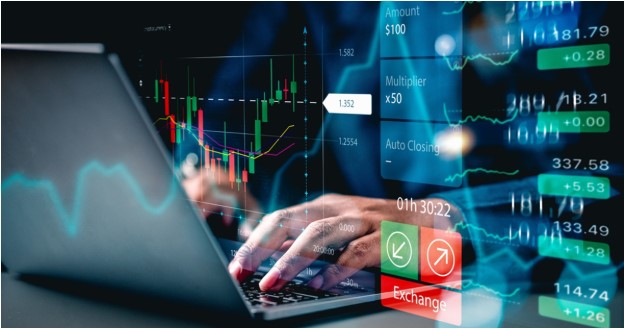
You spent hours over the weekend analyzing your charts, carefully mapping out precise support levels and waiting for the perfect entry criteria to trigger. But the moment the Monday morning session opens, a major currency pair starts aggressively rallying without giving you a pullback, printing massive green candles that scream for attention. Deep down, an intense psychological panic starts to brew, whispering that if you don’t buy right this second, you will miss out on the biggest move of the month. This emotional reflex is known as FOMO, or the Fear of Missing Out, and it acts as a silent destroyer of perfectly structured risk management models.
What exactly happens to my psychology when FOMO takes over my screen routine?
FOMO is essentially a brief, intense emotional hijacking where your survival instincts mistake a moving chart line for a real-world emergency. When you watch an asset take off without you, your brain registers the event as a lost survival opportunity.
Rational analysis instantly goes out the window as anxiety floods your decision-making loops. You completely forget about your backtested checklists and jump into a live position based entirely on a frantic impulse to chase the trend. Operating your terminal via a top-tier best forex broker for mt5 portal gives you access to incredibly fast execution data, but high-speed tools cannot save you from an unmanaged mind. Chasing a market vertical spike usually means buying at the absolute peak of the movement, right when institutional players are preparing to take profits and dump their allocations onto late retail buyers.
Why does jumping into a moving market ruin my mathematical risk-reward ratios?
Entering a trade purely out of emotional impatience destroys the clean, geometric structure required to protect your capital base over a large sample size of executions. When you buy after a massive price extension has already occurred, your technical entry point sits miles away from any logical historical support area.
You are forced to draw an uncomfortably wide, arbitrary stop-loss line just to keep the trade alive. Because you bought at an overextended valuation, the remaining upside potential is heavily compressed. If you want a clear breakdown of how to map these parameters out before emotions blur your vision, studying comprehensive forex trading strategies for beginners guidelines will help you build a rigid mechanical filter. Entering at the wrong location converts a high-probability setup into an expensive, sub-optimal math equation where your potential loss towers over your realistic reward.
How do floating platform spreads and transaction fees penalize a chased trade?
Frictional transaction overhead turns exceptionally punitive when you attempt to force an entry during a chaotic, highly emotional market spike. Every position you execute carries a minor structural cost known as the spread, which is the fractional gap between the live buy quote and the sell quote.
Think of this spread exactly like a minor service processing fee or gate tariff you pay to cross a commercial bridge into the active arena. When asset momentum becomes erratic and retail participants panic-buy a runaway trend, institutional liquidity providers widen their quotes defensively to protect themselves from sudden reversals. Firing a market order into this volatile data stream means you will often get filled with severe slippage. You end up paying an expensive transaction premium just to establish a position that is structurally compromised from the very first millisecond.
Can I use borrowing power to salvage my account after a bad FOMO execution?
Attempting to scale up your lot sizes using extreme borrowing capacity to quickly erase an impulsive loss is a dangerous behavioral trap that almost always ends in a margin call. Leverage operates exactly like a high-powered financial magnifying glass; it expands your relative market exposure without altering your actual underlying cash safety net.
When a FOMO-driven trade starts reversing hard against your account, your brain can easily panic a second time, tempting you to add more leverage to double down on your losing position. Doing this multiplies your risk right at the absolute worst structural moment on the chart. A minor, completely normal intraday correction against your heavy lot sizing will trigger an automated platform sweep, liquidating your remaining equity before the market can even find its local balance.
What practical rules can I use to kill the urge to chase the charts?
Overcoming emotional trading requires converting your entire strategy into an unyielding, mechanical checklist that leaves zero room for subjective guessing. Establish a hard rule that if a price candle leaves your designated execution zone without filling your pending limit orders, the trade is officially dead.
Accepting that missing a move is a completely normal, healthy cost of doing business removes the psychological weight from your sessions. The global markets operate twenty-four hours a day, meaning a fresh technical setup is constantly forming on a separate major pair. If a trend explodes without you, close your laptop screen completely and go for a walk. Giving yourself physical distance from the flashing numbers allows your nervous system to cool down, ensuring you return to your desk as a clinical calculator rather than an emotional gambler.
Summary
The fear of missing out sabotages valid trading plans by forcing retail participants to abandon backtested risk parameters and chase overextended market trends at the absolute worst geometric locations. Protect your long-term capital from expensive emotional mistakes by routing your execution exclusively through structured pending orders around key horizontal support and resistance floors. Keep your transactional overhead protected by avoiding execution during noisy news spikes when platform spreads expand, strictly limit your lot sizing below a fixed 1% account threshold, and record every behavioral slip inside a daily performance journal. By prioritizing strict capital preservation over the cheap thrill of chasing a candle, you isolate your psychology from panic and build an unbreakable foundation for multi-year consistency.